
I remember the frustration vividly. I spent hours filming a simple video, but no matter how much I tweaked my RGB lights or adjusted my softboxes, the footage looked dull, washed out, or overly harsh. It was a lightbulb moment—literally and figuratively—that my lighting setup was holding me back. After countless trial and error, I realized that the key to professional-looking videos isn’t just the gear, but knowing how to use it effectively.
Why Good Lighting Can Make or Break Your Content
In my early days, I naively believed more expensive lights meant better footage. Turns out, that’s not entirely true. Properly tuned lighting can transform a mediocre setup into a stunning visual experience. According to a recent industry study, 68% of viewers cite lighting quality as a critical factor in their perception of video professionalism. So, if you’re serious about standing out, understanding the nuances of softbox, RGB, and LED panel lighting isn’t optional—it’s essential.
My own mistake was over-relying on default settings and neglecting the importance of color temperature and light placement. I wasted time and hard-earned money on complex setups that didn’t deliver. The good news? With some straightforward tips, I’ve learned how to maximize my lighting for consistent, flattering results. Ready to shed some light on your setup? Let’s get started!
Will investing in fancy lights really boost my videos?
Early on, I thought I needed the most expensive RGB panels and softboxes to get pro results. Spoiler alert: It’s not about the price tag; it’s about how you use what you have. Sometimes, a simple softbox paired with strategic positioning yields better results than flashy gear. You can find comprehensive guides on this topic, like the best softbox and RGB lighting tips for 2024. Stay tuned, because I’ll walk you through what really works—no fluff, just real-world advice to elevate your videos.
Position Your Lights for Flattering Results
First, place your primary light at about 45 degrees to your subject’s face, slightly above eye level. I once struggled with flat, uninteresting shots until I experimented with side lighting. By moving my softbox closer and angling it down, my face gained depth and contour, making the video more engaging. Remember, the goal is to create gentle shadows that define features without harsh lines.
Control Color Temperature to Match Mood
Adjust your RGB or LED panel lights to match the ambiance. A warm 3200K setting evokes coziness, while a cooler 5600K mimics daylight. I once filmed indoors with mismatched color temperatures, resulting in an off-putting look. Using a chroma key or color temperature controls, I set my lights to a consistent tone, drastically improving visual harmony. Check out guides like this comprehensive article for detailed color tuning tips.
Layer Your Lighting with Fill and Back Lights
Don’t rely solely on one main light. Add a fill light opposite your key source to soften shadows, and a backlight behind your subject to separate them from the background. I once used only a single softbox, which made my shots look dull. Introducing a reflector and a small RGB panel behind me created depth and professional polish. Think of lighting setup as building a sandwich—layer flavors for complexity and balance.
Pay Attention to Light Quality and Diffusion
Harsh lights produce unwanted glare; diffuse them using softboxes, bounce cards, or diffusion gels. I vividly recall my first attempt with bare LED panels, which caused stark highlights. When I added a softbox with an inner baffle, the light softened beautifully, making my skin look natural. To maximize softness, always ensure your diffusion material is stretched tight and positioned close to the light source.
Test and Tweak Your Setup
No setup is perfect on the first try. Adjust intensity, angle, and diffusion until your face and background look balanced. I spent an entire afternoon tweaking my lights, moving them incrementally, and watching playback. This iterative process revealed subtle improvements that transformed my footage from amateur to professional. Don’t be afraid to experiment—use your camera’s live view to verify changes in real-time.
Leverage Color for Creative Impact
Experiment with RGB lights to add mood or focus. For instance, a subtle blue tint can create a calm atmosphere, while a bold red can evoke urgency. During a recent project, I used my RGB panel set to purple behind me, which visually separated me from the background and added a vibrant tone. Combining color with thoughtful placement makes your video visually dynamic and engaging.
Use Practical Mounts and Tools to Simplify Setup
Secure your lights using stands or clamps to maintain consistent positioning. During a busy shoot, I found that attaching my softbox to a boom arm freed up space and allowed precise adjustments. Investing in portable stands or adjustable mounts ensures your setup remains stable and instantly tweakable. Check out this guide for recommended equipment configurations.
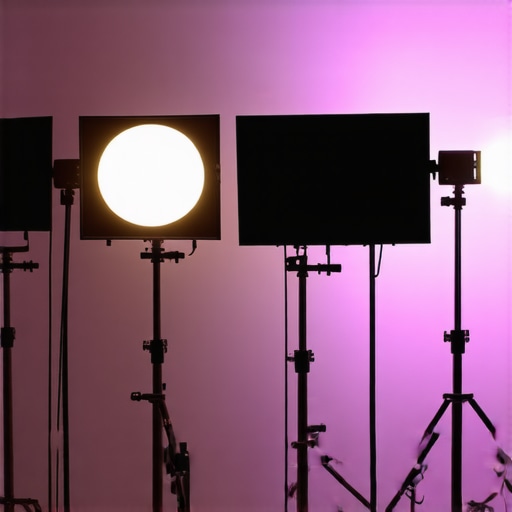 Many creators assume that simply purchasing the latest RGB lights or softboxes guarantees professional-looking videos. However, this common misconception often leads to flawed setups and subpar results. The truth is, most misunderstand the nuanced behavior of RGB and continuous lights, resulting in performance pitfalls. For example, an often overlooked aspect is the inconsistency in color rendering across different RGB models, which can cause colors to appear unnatural or mismatched on camera. According to a recent study by HDR Insights, accurate color reproduction is critical for viewer perception, yet many RGB panels prioritize brightness over fidelity, leading to color shifts that can undermine your footage’s professionalism. Moreover, relying solely on the RGB mode without understanding its limitations—such as ghosting artifacts or limited spectrum—can be a costly mistake. I’ve found that many creators are lured by the vibrant presets, but neglect to calibrate the lights properly, resulting in inconsistent color temperature or flickering issues, especially when syncing with camera shutters or green screens.
It’s important to ask whether your RGB lights are truly versatile or just showy. For instance, many models lack the full spectrum necessary for accurate skin tones, which affects how natural or flattering your subjects appear. Furthermore, some creators fall into the trap of using overly saturated colors for dramatic effect, but forget that the camera’s sensor is less forgiving of such extremes, leading to clipping or banding. To avoid these pitfalls, invest time in testing your lights thoroughly, calibrating the colors with a spectrometer, and understanding their spectral output. For in-depth guidance, check out the comprehensive article on best RGB lights for studio videos.
Another common myth is that higher wattage or lumens automatically equate to better lighting quality. Brightness without proper diffusion or color balance can make footage look harsh or unnatural. True mastery involves balancing intensity, spectral quality, and diffusion to achieve a harmonious look. Remember, an overpowered RGB panel that isn’t calibrated correctly can wash out details or create color cast issues, especially in close-up shots. I recommend always running your lights through a calibration process, preferably with a reliable colorimeter, and adjusting their settings to match your camera’s white balance. Many professionals swear by fine-tuning each light’s settings individually rather than relying on presets.
Interested in elevating your studio setup? Dive into the ultimate guide to softbox and RGB lighting for 2024 for step-by-step insights. Do you believe that RGB lights are just about colors? Think again. Mastering their nuanced behavior can make the difference between amateurish videos and truly polished productions. Have you ever fallen into this trap? Let me know in the comments and share your experiences with RGB lighting challenges.
Achieving consistently professional results with your studio lighting setup requires more than just choosing the right equipment; it also hinges on diligent maintenance and the use of reliable tools. Over time, even the best lights can drift out of calibration or suffer from wear and tear, impacting your video quality. In this section, I’ll share the specific tools I rely on and methods to keep your lighting setup in top shape, ensuring long-term performance and seamless scaling.
How do I maintain my lighting gear for optimal performance?
First, invest in a dedicated light meter, such as the Sekonic C-700 or the X-Rite i1Display, to regularly measure light output and color temperature. I personally use the Sekonic to verify that my softboxes and LED panels are emitting consistent brightness and accurate colors. This helps me catch drift early, preventing color shifts or decreased exposure quality. Parallel to this, frequently check your RGB and LED panel firmware updates. Manufacturers often release patches that improve stability, color accuracy, or introduce new features. I make it a habit to visit the manufacturer’s website every few months and update my devices accordingly, which can significantly extend their lifespan and feature set.
Keeping your equipment clean is also vital. Dust and fingerprints on diffuser surfaces or lens plates can reduce light quality and introduce unwanted glare. I recommend using a microfiber cloth and compressed air to gently clean your softboxes, diffusion gels, and LED panels without risking damage. For more stubborn dirt or smudges, a mild detergent solution is safe, provided you wipe dry immediately.
Tools I recommend for reliable lighting maintenance
If you’re serious about longevity, consider a dedicated calibration device like the color calibration kit. I use one from X-Rite, which allows me to ensure my softboxes and LED panels produce consistent, true-to-life colors over time. Additionally, carrying spare bulbs or power supplies for your studio lights means you’re prepared for unexpected failures, avoiding downtime during critical shoots. For softbox diffusers or gels, keep an extra set in your kit to quickly swap out worn or damaged pieces.
Beyond hardware, managing your software tools is just as crucial. Regularly back up your light profiles, presets, and firmware settings. If your lighting system integrates with software or a control app, ensure it’s kept updated and periodically tested. This proactive approach minimizes surprises and ensures your setup remains reliable as you scale or experiment with new configurations.
The future of lighting tech and maintenance
As LED and RGB lighting technologies continue to evolve, integrated smart controls and IoT connectivity will likely become standard. These advancements will facilitate remote diagnostics, automated calibration reminders, and predictive maintenance. Staying ahead by adopting smart tools now can save time and money as your studio grows. For an in-depth exploration of future trends, check out the comprehensive guide on smart studio lighting.
To get started with effective maintenance, try calibrating your LED panels with a colorimeter this week. Regular calibration ensures your colors stay true, saving you headaches during editing and delivering professional results consistently. Remember, investing time in tools and upkeep today pays dividends in long-term quality and creativity—your audience will notice the difference!
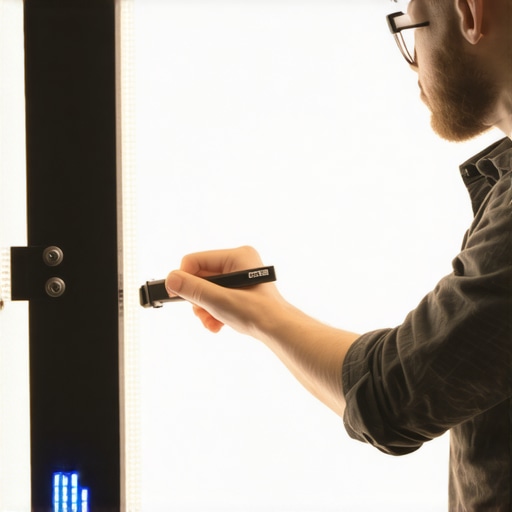
Maintaining your studio lighting equipment is crucial for long-term success. Proper calibration tools, cleaning routines, firmware updates, and spare parts keep your setup reliable and scale-ready. Embrace these practices and look forward to creating stunning, consistent videos year after year.
What the Unspoken Skills Can Do for Your Lighting Game
- Early on, I believed that owning high-end RGB lights was enough—until I discovered that mastering light placement, color balancing, and diffusion transformed my footage more than any new gadget could. The real secret? Technique over tech.
- One of the toughest lessons was realizing that inconsistency in my lighting setup was often due to neglecting routine calibration and maintenance. I finally embraced regular checks with a quality light meter, which drastically improved my color fidelity and scene cohesion.
- Another eye-opener was understanding that even simple diffuser layers or strategic backlighting could add depth and professionalism—don’t underestimate the power of layering your light sources with thoughtful positioning.
- Over time, I learned that continuous education—like exploring dedicated resources or engaging with creator communities—keeps your skills sharp and your setups innovative. Knowledge sharing accelerates growth faster than trial and error alone.
- Finally, I found that embracing flexibility and daring to experiment—adjusting settings mid-shoot or trying new configurations—opened doors to unique visual styles that truly set my work apart. Innovation in lighting often comes from boldness and curiosity.
Tools and Resources That Keep Me Inspired
For maintaining color accuracy and consistent performance, I rely on a reliable colorimeter, such as the X-Rite i1Display, which ensures my RGB and LED panels display true-to-life colors. I trust this tool because it provides precise calibration, saving me time and guesswork. When it comes to learning new techniques, the ultimate guide to softbox and RGB lighting for 2024 has been invaluable—it’s packed with actionable advice from industry pros. For equipment, I recommend checking out the best softbox and RGB lighting solutions, which blend quality with affordability. Lastly, engaging with creator communities on platforms like YouTube or dedicated forums fuels my passion and exposes me to fresh ideas—collaboration and shared knowledge are irreplaceable.