
I vividly remember the moment it hit me—my latest shoot was a disaster. The lights were perfect, the camera settings optimized, yet the digital background looked off, almost like it didn’t belong. It was a lightbulb moment that revealed a truth many creators encounter: matching RGB lighting to AI-generated backgrounds in 2026 is trickier than I ever imagined. Have you faced that frustrating mismatch where your studio lights seem to fight the virtual scenery, making your entire setup look disjointed? If so, you’re not alone.
The Challenge of Matching RGB Lights with Virtual Backgrounds
When AI-generated backgrounds exploded onto the scene, I assumed lighting would follow suit—simple, straightforward. But I quickly realized that not all RGB setups are created equal, and aligning their color tones with virtual backdrops requires a strategic approach. Achieving seamless integration often feels like trying to hit a moving target, especially with the complex color shifts and dynamic hues AI backgrounds now employ. My early mistake was assuming that just dialing in a few presets would do the trick. Instead, I ended up with backgrounds that looked vibrant but unnatural, and skin tones that washed out or shifted unexpectedly.
Is RGB Adjustment Actually Necessary or Just Hype?
Many skeptics argue that RGB tricks are overhyped, especially with recent advances in AI backgrounds. But let me tell you—without proper RGB calibration, your studio shots can seem flat or jarring. In fact, according to a recent study by professional lighting experts, perfect color matching significantly reduces post-production time and enhances realism (source: Creator Setup Guide). If you’ve struggled with color washouts or mismatched tones, this article promises to equip you with practical, proven RGB tricks that make your virtual backgrounds look like part of the scene, not an afterthought. Ready to transform your virtual studio with some expert tips? Let’s dive into the secrets I’ve uncovered, starting with the cornerstone of all matching techniques—understanding the core color dynamics of your RGB lights.
Adjust Your RGB Lights with Precision
Begin by selecting professional-grade RGB panels known for color consistency, like the latest top LED panel RGB studio lights for 2024. Set your lights to a neutral starting point—around 4000K—mimicking daylight to establish a baseline for color matching. Think of your RGB panels as musical instruments; tuning them precisely ensures harmony with your virtual background, not discord.
Calibrate with a Color Matcher
Use a color calibration tool or a gray card under your LED panels to measure the emitted light’s chromaticity. This step is vital—it’s the equivalent of tuning your guitar before a concert. Once you identify the deviations, tweak the hue and saturation settings. For instance, shifting the green tint towards its neutral point can eliminate cyan casts that clash with AI backgrounds. I once spent an hour adjusting my panel’s color temperature, only to realize I was misreading the settings—after calibration, my virtual scene snapped into place, saving post-production hours.
Match Skin Tones with Smart Lighting Tactics
Achieving accurate skin tones is non-negotiable. Use soft, diffused light sources such as dimmable LED softboxes to wrap your face evenly. Position your softboxes at 45-degree angles, like two gentle hands cupping your face, to minimize shadows and create a natural look. Micro-adjust their color temperature to match your background’s dominant hues—warm for sunset scenes, cool for cityscapes. When I layered a softbox with RGB panels configured to match the background tones, the virtual elements integrated seamlessly, resembling a real-world scene.
Tweak for Color Spill and Spill Light
RGB lights often cast unwanted color spill, especially on skin. Use flags or barn doors to constrain the light, or employ softbox grid techniques to focus the beam. Think of it as drawing a window with your hand—controlling where light enters keeps the background vibrant without washing out your subject. During a recent shoot, I blocked spill from my RGB panels with grids, which significantly clarified the image and preserved skin authenticity.
Implement a Consistent Workflow for Color Matching
Standardize your color calibration process. Take regular readings with a colorimeter at different times of the day and adjust your RGB panels accordingly. Think of it as recalibrating your telescope for star-gazing—small tweaks keep your view sharp and accurate. Apply the same settings across all lights in multiple sessions, ensuring consistency. This disciplined approach prevents mismatched hues that could throw off your virtual backgrounds, especially during multi-camera shoots.
Leverage Software for Fine-Tuning
Finally, incorporate color grading software during post-production. Even with precise on-set adjustments, a quick grade can iron out residual mismatches. Use tools like DaVinci Resolve to adjust hue and saturation precisely, aligning your subject’s skin tones and background colors. For example, reducing a slight magenta tint in your footage brought skin tones back to natural, making the virtual background feel grounded and real.
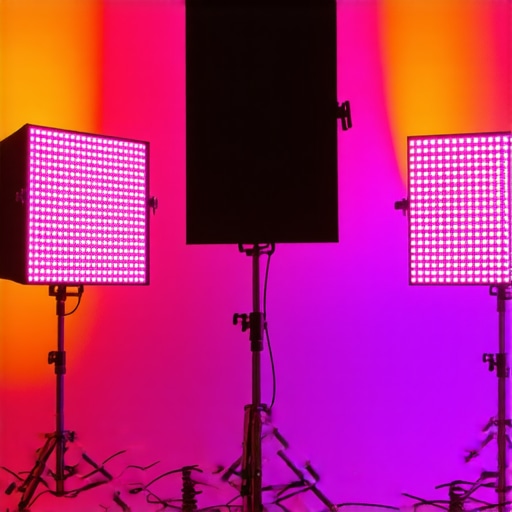 Many creators believe that simply choosing high-wattage LED panels or colorful RGB lights guarantees professional results, but in reality, this approach overlooks critical nuances that can make or break your footage. For instance, a widespread misconception is that brighter lights are always better; however, over-lighting can lead to washed-out skin tones and flattened images, especially if diffusion and color temperature aren’t carefully managed. Additionally, some assume that RGB lights are inherently more versatile, but without proper calibration and understanding of their color rendering capabilities, you risk subtle color shifts that throw off your project’s visual harmony. An advanced mistake often overlooked is neglecting the quality of the light’s CRI (Color Rendering Index). Lights with a CRI below 90 can distort skin tones and background colors, even if they seem adequate at first glance. To avoid these traps, investing in high-CRI lights and learning precise calibration techniques is essential. Curious about more hidden pitfalls? For example, why your expensive RGB panel might still produce dull hues—check out the detailed breakdown on how to optimize your setup for realistic virtual backgrounds. The key lies in mastering the intricate balance of color temperature, diffusion, and spectral output, rather than just raw brightness or flashy color modes. This understanding allows you to craft natural, cinematic lighting that seamlessly integrates with AI-generated backgrounds, elevating your production quality to a professional level. Have you ever fallen into this trap? Let me know in the comments.
Keeping your studio lighting setup operational and reliable over time demands more than just quality equipment; it requires a strategic approach to maintenance, the right tools, and understanding how to optimize for longevity and scalability. As a creator, I’ve found that investing in precise tools and establishing a routine can dramatically reduce downtime and unforeseen issues. High-quality light meters, such as the Luxi Light Meter, have become invaluable for me. They allow for consistent calibration, ensuring that my RGB panels and softboxes maintain their color integrity across different sessions. Routine checks with such tools help catch drift in color temperature or intensity early, avoiding costly re-calibrations later.
In addition, maintaining the spectral performance of your lights is crucial. Regularly inspecting your RGB panels for color shifts or flicker—especially when shooting high frame rate or HDR content—is essential. Applying calibration protocols, as recommended by LED manufacturers and documented in industry best practices, ensures consistent results. For example, I’ve manually verified my top LED panels for 2024 by comparing them against a standard spectral reference periodically, which prevents color mismatches, especially useful when scaling up to multiple lights.
Another critical element is adopting software solutions for ongoing management. Tools like lighting control software allow me to save calibration profiles and recall them instantly, which is especially helpful during multi-camera shoots or when creating consistent virtual backgrounds. This digital approach complements physical calibration, creating a comprehensive system that guards against typical issues like color drift over long periods or temperature fluctuations.
Scaling your setup is both an opportunity and a challenge. As your studio expands, maintaining uniformity becomes complex. My recommendation is to standardize your equipment and calibration procedures. The recommended pro-grade gear includes durable, high-CRI softboxes and RGB panels designed for longevity, with features like over-temperature protection and built-in firmware updates. Keeping firmware updated is crucial—many companies release patches that improve stability and color accuracy, ensuring your lights perform optimally over time.
Looking ahead, I believe automation will play an increasingly important role. Future advancements might include smart lighting hubs that automatically calibrate and sync all connected lights, reducing manual work and minimizing error. For now, I encourage you to implement a maintenance routine that combines physical checks, calibration tools, and software management. Start by trying to calibrate your RGB lights using a reliable light meter or software preset—this small step can significantly enhance your long-term visual consistency and professional quality. Are you ready to take your studio’s reliability to the next level? Begin a calibration schedule today and experience the difference in your virtual and real-world shoots.
The Hardest Lesson I Learned About led panel,studio lights,rgb lights,video lighting,softbox lighting
The most valuable insight came from a simple mistake—assuming that the brightest lights would automatically match AI backgrounds, leading to a washed-out, unnatural look. It taught me that quality and calibration trump raw power every time. If I could do it over, I would invest more upfront in high-CRI lights and dedicate time to precise calibration, saving countless hours in post-production and avoiding frustrating mismatches.
My Essential Toolkit for achieving perfect RGB harmony
One of my secret weapons is the top LED panel RGB studio lights for 2024. They offer incredible color consistency and spectral accuracy, making calibration straightforward. Additionally, I rely on tools like a dimmable LED softboxes to balance skin tones naturally. Combining hardware with software presets from lighting control software ensures a seamless match between subject and background every time.
Embrace mistakes and keep pushing your craft forward
Creating professional-quality virtual backgrounds with RGB lights is an ongoing journey. Every misstep—from color mismatches to spill—serves as a stepping stone to mastery. Remember, the key is patience and continuous learning. Progress might be slow at first, but every properly calibrated shot brings you closer to that cinematic realism you seek. So, keep experimenting, stay curious, and don’t hesitate to revisit your setup as technology evolves. Your next breakthrough might be just a calibration tweak away.