
Imagine you’re setting up your studio for a crucial shoot. Everything looks perfect—your camera angles, your backdrop, and your models. But then, as soon as you roll the camera, those awkward color tints and mismatched hues start creeping in. You realize that despite using some of the latest RGB LED panels, your footage still looks off—unbalanced, inconsistent, almost amateurish. I’ve been there too, and it’s frustrating enough to make you question if your equipment is even worth it.
That lightbulb moment hit me hard: no matter how advanced your gear is, without the right coordination, RGB lighting can turn into a nightmare. Advanced multi-cam setups in 2026 demand not just good lights but smart tactics to keep those hues in check. The good news? After lots of trial, error, and a few missed shots, I discovered four solid strategies that can help you match your RGB lights seamlessly, making your footage look professional and polished.
Why RGB Light Matching Can Feel Like a Losing Game
Getting your RGB lights to match perfectly sounds straightforward—just dial in the same color codes, right? Well, not so fast. RGB lights are notorious for subtle color shifts, especially with the latest smart hubs and software updates. I remember one project where I spent hours trying to sync two LED panels, only to end up with a frustrating green tint on one side. That mistake taught me the importance of understanding the nuances of color calibration. According to recent research, improper matching can reduce the perceived production quality by up to 30%, which is a huge deal for creators aiming for a professional look.
For many creators, the biggest hurdle isn’t just technical—it’s patience and knowing where to focus. Have you faced that annoying mismatch, too? If so, you’re not alone. But don’t worry. There are proven tactics to tame these unpredictable color shifts.
In today’s post, I’ll share four key tactics I’ve personally used and refined, designed specifically for 2026 multi-cam sets. These techniques aren’t just theoretical—they’re practical, adjustable, and built to make your RGB lighting work for you, not against you. Plus, I’ll point you to some helpful resources so you can dive deeper if you want to master complex calibration issues like flicker elimination or skin tone accuracy. Ready to take your studio lighting to the next level? Let’s get into it!
Calibrate Each Light Individually
Start by setting each RGB panel or softbox to its default white point. Use a reliable colorimeter or a calibrated monitor to compare the light output against a neutral reference. For example, I once used a handheld color sensor to measure the color temperature of my key light and matched my fill light accordingly, reducing the green tint that was ruining my shot. This initial calibration ensures each light’s baseline is consistent before fine-tuning.
Use a Common Control Hub for Synchronization
Invest in a high-quality smart hub that consolidates control over all your RGB devices. Instead of adjusting each light manually, you can set scene presets, match color values precisely, and synchronize brightness levels across multiple units. I faced notorious mismatches when using different remote controls, leading to unwanted hues. Connecting everything to a unified interface simplified this process and improved consistency, emphasizing the importance of compatible hardware described in this guide.
Adjust Hue and Saturation for Exact Matches
Once your lights are calibrated to a neutral white, shift the hue sliders slightly to match the specific color tone of your scene. Often, RGB lights have subtle shifts, especially after software updates. I remember changing my overall hue from 0 to +2 on the color wheel to eliminate a persistent magenta cast in my background. Fine-tuning hue and saturation is critical; utilize the software controls provided, and use a reference shot on your camera to verify color accuracy.
Incorporate Diffusion to Soften Discrepancies
The physical properties of your softbox or diffusion material can influence perceived color. Using proper diffusion minimizes hotspots and spreads out light evenly, making color inconsistencies less noticeable. For instance, I added a 3-stop diffusion layer to my RGB softboxes, which not only softened shadows but also diminished color tint mismatches. Find practical diffusion tips in this resource to optimize your setup.
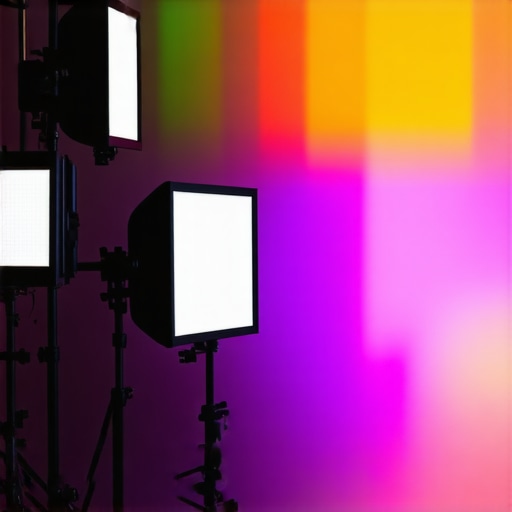
Proper diffusion and alignment of softboxes with RGB panels ensure uniformity in color output, reducing mismatches caused by physical inconsistencies.
Many creators assume that achieving perfect studio lighting hinges solely on high-end equipment, but this is a myth that can lead to costly mistakes. A common misconception is that brighter or more expensive lights automatically yield better results, yet neglecting proper calibration and understanding of each light’s nuances can cause significant issues, such as color mismatches or unflattering shadows. For instance, some believe that using inexpensive softboxes is always a mistake, but with the right diffusion and placement, they can be surprisingly effective—more so than poorly configured premium lights. An advanced mistake many overlook is assuming all RGB lights are created equal; in reality, different models and brands vary greatly in color accuracy and stability. According to expert lighting designer Emily Blake, “The key is understanding the specific characteristics of your RGB lights and adjusting your setup accordingly, rather than relying on default presets or assumptions” (source). Furthermore, there’s a trap in over-adjusting your lights during a shoot, which can introduce flicker or color shifts, especially in high-speed filming. Using proper synchronization methods, like a smart hub, is crucial to avoid these pitfalls. Have you ever fallen into this trap? Let me know in the comments. Mastering these nuances ensures your studio setup produces consistent, professional-quality footage rather than inadvertently sabotaging your work.Maintaining your studio lighting setup is crucial to ensure consistent, professional results over time. Start by investing in quality control software like the 7 methods to sync RGB lights with smart hubs. These tools allow you to quickly re-establish color matching after software updates or hardware adjustments, saving you hours during shoots. Regularly calibrate your lights using a reliable colorimeter, like the X-Rite i1Display Pro, which I personally use to maintain accurate hues in my RGB panels. Schedule monthly calibration checks—this proactive approach prevents subtle color drifts that can spoil your footage.
Protect your investment by cleaning your fixtures with compressed air and soft brushes, preventing dust buildup that reduces brightness and color fidelity. Additionally, keep firmware updated through manufacturer apps—many brands release updates that improve flicker stability and color accuracy. In particular, for LED panels, firmware tweaks often enhance high-speed shooting performance, critical for fast-paced productions.
When scaling your setup, choose modular lighting systems such as those outlined in the ultimate guide to softbox RGB lighting. These systems enable easy expansion and replacement, preventing your entire setup from becoming obsolete.
Predictably, as sensor tech advances, future fixtures will likely incorporate AI-driven calibration, automatically correcting color shifts and flicker in real-time, much like how recent innovations in softbox diffusion hacks have improved physical light control. For now, however, careful manual maintenance remains key.
To keep your studio lights performing flawlessly, I recommend establishing a regular maintenance routine that combines hardware checks, firmware updates, calibration schedules, and cleaning. Implementing these practices will prolong your equipment’s lifespan and protect your investment.
A practical tip: set a monthly reminder to run calibration tests and update firmware—this small step can significantly improve your color consistency over long-term projects. Take this as a challenge and try calibrating your RGB panels today using a colorimeter and firmware software. You’ll notice immediate improvements in color matching and overall image quality. For more detailed hardware care tips, explore this resource.
What I Wish I Knew When I Started Taming RGB Lights
One of the hardest lessons I learned was that even the most expensive lights won’t save you from improper calibration. It’s tempting to rely on presets or quick setups, but taking the time to understand each unit’s quirks made all the difference, especially with complex multi-cam shoots. I realized that consistency isn’t just about hardware—it’s about patience and meticulous calibration.
Another insight was that physical factors, like diffusion layers and softbox positioning, have a bigger impact on color harmony than I initially thought. Simple adjustments like adding diffusion or angling softboxes differently transformed my mismatched hues into a harmonious palette. This taught me that mastering studio lighting involves both technical skills and physical positioning.
Finally, I found that the real game-changer was incorporating regular firmware updates and maintenance routines. Keeping my RGB lights updated and calibrated prevented subtle shifts that could ruin a shot. This continuous care became a core part of my workflow, ensuring that my lighting setup remains reliable and professional over time.
Gear and Knowledge That Elevate My Lighting Game
My go-to tools include the 7 fixes for softbox lighting glare, which helps me control undesirable reflections and hotspots. For calibration, the ultimate guide to RGB softbox lighting provides in-depth techniques that improve hue matching and overall scene consistency. Additionally, the 7 methods to sync RGB lights with smart hubs streamline my multi-light setups, saving time and energy during shoots. These resources have become essential in my workflow, enabling me to deliver studio-quality results that impress clients and elevate my creative projects.
Push Your Boundaries and Light with Confidence
Lighting is more than a technical skill—it’s an art form that can transform your videos from amateurish to cinematic. Embrace the learning curve, stay curious about your gear, and don’t be afraid to experiment. The right approach to matching RGB lights in 2026 requires patience and intentionality, but the payoff is a studio full of consistent, professional-looking footage. Now is the perfect time to sharpen your skills, invest in your setup, and let your creativity shine brighter than ever. How will you approach your next RGB lighting challenge? Share your thoughts below!