
I vividly remember the moment I realized my videos looked flat and lifeless, despite having a decent camera and a good script. It was late at night, and I was editing a vlog, only to notice that my lighting made me look like I was broadcasting from a foggy window. That revelation hit me hard—lighting isn’t just about illumination; it’s the secret ingredient to making your content pop and connect.
Why Your Lighting Choices Could Make or Break Your Content
In the realm of video creation, lighting is often overlooked, yet it’s the backbone of professional-looking footage. When I first started, I relied on basic desk lamps and a few cheap LED panels I bought online. The results? Uneven skin tones, muddy backgrounds, and colors that looked off. Frustrating, right? I spent hours trying to fix it in post, but no amount of editing can truly replace good lighting.
The truth is, the right softbox, LED, or RGB lights can transform your setup from amateur to studio-quality. Proper lighting not only enhances your image quality but can also convey mood, emphasize clarity, and set the tone of your videos. Believe me, investing in quality lighting tools was one of the best decisions I’ve made—once I understood what to look for.
If you’re tired of feeling stuck with subpar visuals, then you’re in the right place. Today, I’ll help you navigate the maze of options, avoid common mistakes, and find lighting solutions tailored to your content style and budget.
Is All the hype around RGB and Softbox lights justified?
Early on, I made the mistake of assuming that all lights are created equal. I bought a cheap RGB strip light without understanding its limitations, which led to inconsistent color rendering and flickering in my videos. Trust me, not every RGB light will do the trick. According to a recent study by Wistia, 85% of viewers say lighting quality is crucial in determining whether they watch a video to the end.
So, how can you avoid these pitfalls? That’s what I’ll explore in the upcoming sections. If you’ve ever faced the dilemma of choosing between different lighting options or hesitated because of the technical jargon, stay tuned. I’ll guide you through the practical steps and insider tips to upgrade your studio lighting setup effectively.
Ready to shed some light on your video process? Let’s dive into the world of professional softboxes, LED, and RGB solutions that can elevate your content from good to stunning.
Choose Your Light Sources Carefully
Start by selecting the right type of lights based on your budget and content style. For beginners, LED panels are versatile and easy to use. They produce consistent, flicker-free light and often come with adjustable brightness and color temperature. Invest in a quality LED panel like the one discussed in our comprehensive guide to ensure longevity and performance. When you’re ready for more control, consider RGB LED panels that allow you to tweak colors dynamically, perfect for creative effects or mood setting. Compare options and learn how to pick the best in the detailed review article.
Position Your Lights Strategically
Placement is everything. Think of your lights as the brushstrokes in a painting. Place your main light—often a softbox—at a 45-degree angle to your face, slightly above eye level. This creates flattering shadows that add depth. Use a fill light on the opposite side, at a lower intensity, to soften harsh shadows. For background separation, add a backlight or hair light—positioned behind you, aimed at your hair or shoulders—to create visual separation from the background, making your shot pop. For inspiration, see how professional setups incorporate softboxes with RGB options.
Utilize Diffusers and Modifiers
Diffusing light prevents harsh shadows and uneven skin tones. Softboxes are excellent for this purpose; they act like giant umbrellas that spread light evenly. Think of them as a cloud softly glowing over your scene, creating a natural look. If you’re using LED panels, add a diffusion cover or bounce light off a reflective surface, like a white foam board, to achieve the same effect. Experiment with different modifiers—such as grids, barn doors, or snoots—to control light spread precisely. These accessories help sculpt your lighting and direct attention exactly where you want it. For refined tips, consult the article on softbox and RGB lighting tricks.
Adjust Color Temperatures Effectively
Match your lights for color consistency, or intentionally contrast them for artistic effect. Standard daylight-balanced lights (around 5600K) provide natural-looking skin tones. If using lights of different types—say, an RGB panel alongside a bi-color LED—set their temperatures to match. For a warm, cozy vibe, dial down to around 3200K; for bright, energetic scenes, go towards 5600K or higher. Remember, the goal is harmony; mismatched temperatures create jarring visuals unless used intentionally for dramatic effect. Master this by testing different settings and observing how they influence your shot on camera. Learn more about fine-tuning in our lighting tuning guide.
Create Depth with Strategic Layers
Don’t just light yourself—think in layers. Use a combination of key, fill, and background lights to add dimension. For example, a soft key light at 45 degrees with a subtle background light behind you can turn a flat scene into a vibrant one. This setup guides the viewer’s eye naturally and makes your videos more engaging. I remember experimenting with placing a small RGB light behind my setup during a messy shoot; the result was an instant visual upgrade that added depth and professional polish. Explore techniques like layering lights for rich visuals.
Control Light Intensity and Color with Smart Tools
Use dimmers and color controls to refine your look on the fly. Many modern LED panels feature app controls, allowing adjustments without touching the hardware. This flexibility helps respond to changing ambient light or to match the mood. For precise control, consider setups with physical dimmers, remote controls, or voice commands. These tools make dynamic adjustments easier, especially when shooting in uncontrolled environments. For detailed guidance, visit our review on lighting control techniques.
When it comes to lighting your studio or creating professional videos, many creators fall into common traps that hinder their visual quality. One widespread misconception is that high-powered, colorful RGB lights automatically elevate your footage. In reality, enthusiasts often overlook the importance of color accuracy and proper calibration. RGB lights can produce vivid hues, but without understanding their limitations, you risk ending up with unnatural, oversaturated colors that distract viewers. Expert guidance emphasizes that controlling the color spectrum and maintaining consistency across your lighting setup is crucial—something many overlook, leading to muddy or mismatched tones. For example, mismatched color temperatures between RGB panels and softboxes can cause jarring visuals, undermining your intended aesthetic. To get this right, refer to our comprehensive studio lighting guide.
A common mistake is assuming all LED panels and softboxes are interchangeable. Not so. Softboxes diffuse light evenly, creating a softer, more flattering image, while LED panels often provide harsher illumination if not equipped with proper diffusers. Mixing these without understanding their characteristics leads to inconsistent shadows and skin tones. This oversight is especially detrimental when trying to achieve a cinematic look. Invest in quality modifiers and understand their functions by exploring our softbox lighting tips.
Advanced creators ask: How does the spectral output of different light sources impact color grading? Studies show that lights with poor CRI (Color Rendering Index) can make post-production color correction more difficult, resulting in washed-out or unnatural skin tones. It’s a subtle nuance often missed by beginners, but crucial for achieving professional-grade footage. When selecting LED panels, opt for those with a high CRI (above 95) to ensure vibrant, accurate colors. Always test your lights before shooting, and consider how your camera’s sensors interpret different spectral qualities. For deeper insights, review our LED panel comparison article.
Finally, avoid the trap of over-reliance on automation features like auto white balance and scene modes. Many assume these settings will perfectly balance their lighting, but in reality, they often struggle with mixed sources and color casts. Manual adjustments, though requiring some learning, give you precise control and consistency. This is especially vital when creating content for brands or portfolios where color integrity is non-negotiable. For expert tips on fine-tuning your setup, check out our lighting calibration guide.
Are you making any of these lighting mistakes? Have you ever fallen into this trap? Let me know in the comments.Maintaining your studio lighting setup is crucial to ensure consistent, professional results over the long term. I personally rely on a combination of routine checks and quality tools to keep my RGB lights, softboxes, and LED panels functioning optimally. Regularly cleaning your light modifiers, such as softboxes and diffusers, can prevent dust buildup that dulls light quality. Use compressed air or soft brushes to clear vents and fan filters, especially if your lights have cooling systems, which are common in high-end RGB panels. For electronic components, I swear by using a multimeter to verify power supplies and connections—this helps catch issues before they cause failures during a shoot.
Moreover, always keep your firmware and software control apps up to date, especially for smart LED panels. Manufacturers like Nanlite and Aputure frequently release updates that fix bugs and introduce new features. Regular calibration of your lights with a reliable colorimeter ensures your output remains accurate, which is vital when matching multiple sources or color grading in post-production. In fact, I follow a quarterly maintenance schedule, dedicated to checking connections, updating firmware, and recalibrating all RGB and softbox lighting. This disciplined approach guarantees my studio maintains its edge in quality and reliability.
How do I maintain my lighting gear over time?
In the future, I predict that smarter, integrated diagnostic tools will become standard, allowing for real-time monitoring of bulb life, color accuracy, and power load to prevent unexpected failures. Embracing these advancements will streamline upkeep and ensure consistent results every time.
If you’re serious about long-term performance, consider investing in a professional-grade power supply tester and a reliable lens cleaning kit to keep your modifiers pristine. Don’t forget to routinely check the integrity of your cords and mounts—damaged cables or unstable fixtures can lead to uneven lighting or even safety hazards. For detailed strategies, review our comprehensive maintenance guide.
To get started today, try scheduling quarterly checks and updates for your setup. It’s a small step that guarantees your lighting remains flawless, saving you time and costly repairs in the long run. Remember, well-maintained tools are the foundation of great content anyway—keep yours shining bright! 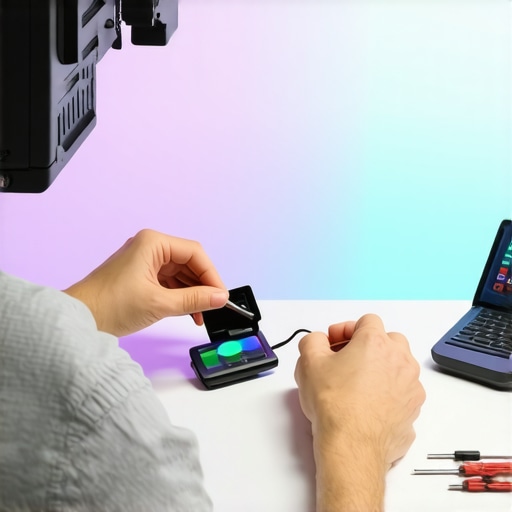
The Hidden Lessons Behind Perfect Lighting
One of the most profound revelations I encountered was realizing that even the most expensive camera and best script can’t compensate for poor lighting. It’s easy to overlook how crucial the subtle nuances of light placement and quality are in elevating your videos from ordinary to captivating. My journey taught me that investing time in understanding and mastering light layering, modifiers, and calibration unlocks a creative edge that no editing trick can replace.
Sometimes, I wish I had grasped earlier that a small adjustment—like pivoting a softbox or tweaking the color temperature—can dramatically alter your shot’s mood. It’s the subtle constant refinements and attention to detail that truly set professional productions apart. Embracing this mindset early on saved me countless hours in post-production, allowing every shot to shine naturally and effortlessly.
Another lesson I learned the hard way is that technology alone doesn’t do the heavy lifting—your understanding of how lights work and interact on set makes all the difference. From choosing the right diffuser to layering with accent lights, each decision contributes to the story your visuals tell. Recognizing the importance of these choices transformed my approach to lighting from a chore into an art form.
Piecing Together a Studio for Long-Term Excellence
Building a reliable lighting setup isn’t about buying the latest gear randomly; it’s about understanding your needs and selecting tools that will grow with you. I’ve found that continuously experimenting with different modifiers, such as diffusion covers or grids, and staying current with innovations—like RGB options—keep your content fresh and engaging. For comprehensive insights on creating a versatile studio, I recommend exploring the softbox and RGB lighting setup.
Maintaining your equipment over time is equally vital. Regular calibration and cleaning preserve the integrity of your light quality, ensuring consistency in your videos. Implementing routine checks and firmware updates has become an essential part of my workflow, preventing unexpected disruptions during critical shoots. The more invested I was in proper care, the higher the quality of my final output—and that’s a lesson worth sharing.
Lighting Beyond Technique – It’s About Passion and Persistence
Getting comfortable with complex lighting setups takes time and patience. Still, the passion for crafting visually stunning content drives me to keep improving. Whether experimenting with new RGB effects or mastering the art of layering, each step brings you closer to professional results. Remember, the top creators didn’t achieve their level overnight—they’sn’t either, but perseverance and learning do pay off.
If you’re ready to take your video lighting to the next level, start small, keep experimenting, and don’t be afraid to make mistakes. The key is to stay curious and committed. To help you get started, check out our comprehensive guides and resources that demystify the nuances of professional lighting. Your creative evolution depends on the light you choose—so, what’s stopping you from illuminating your best work yet?